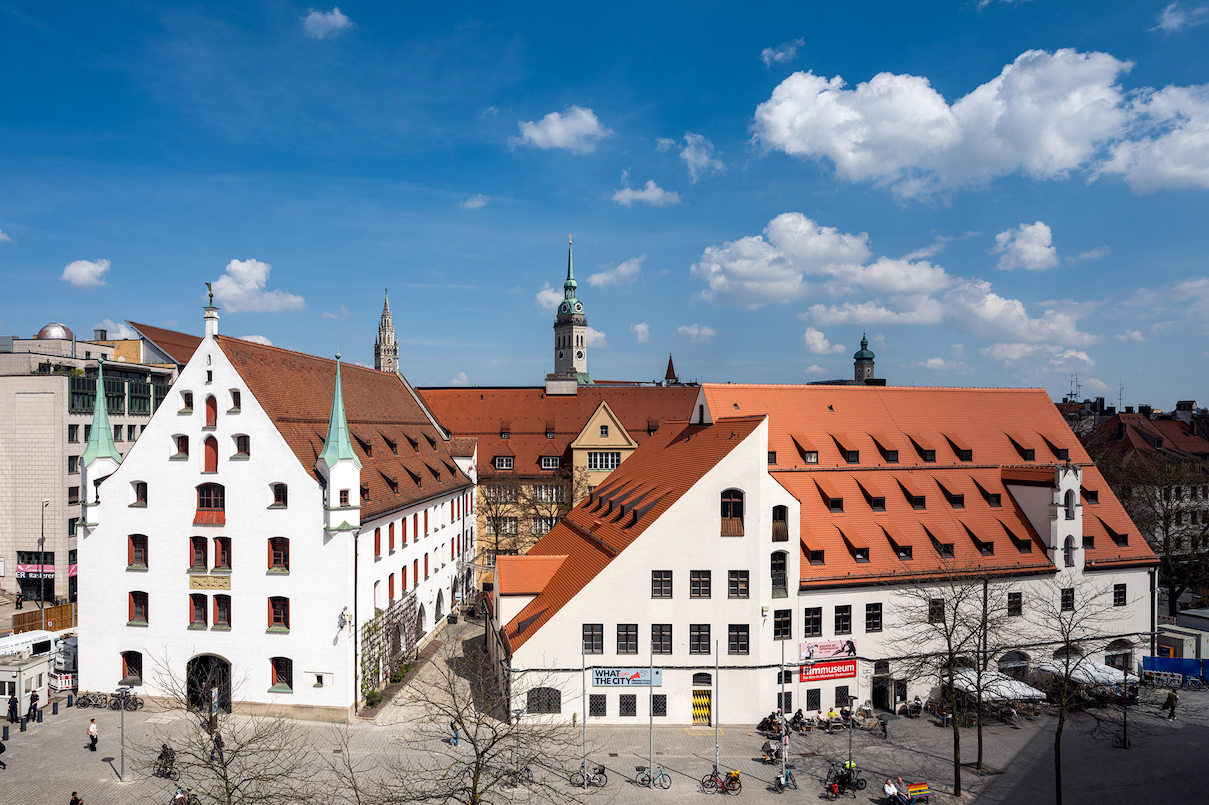
Münchner Stadtmuseum
Münchner Stadtmuseum

We are delighted to welcome the Münchner Stadtmuseum in Munich, Germany as a participant in the WanBel global network.
The Münchner Stadtmuseum's Music Department originates from the private collection of Georg Neuner (1904–1962), a Munich collector with a passion for ethnomusicology. He was guided by his vision of a museum dedicated to sound, featuring instruments from around the world and served as head of the Music Collection until his death. Today the Music Collection holds around 6,000 instruments, with half coming from outside Europe.
Close to 100 of these musical, ritual and sound-producing instruments were collected from New Guinea between 1928 and 1985. Due to colonial collecting practices, contextual knowledge was often not passed on together with the instruments, and many of them cannot be clearly attributed to a specific place or community of origin. The holdings include garamut (slit drums) and carved wooden trumpets from the Sepik region, kundu and tifa drums from across the mainland and the islands, bullroarers attributed to the Huon area, Astrolabe Bay, and the Gulf of Papua, panpipes and susaps (Jew's harps), and two lounuts (friction drums) and one larung (a rattle used in shark-calling rituals) from New Ireland. The collection also holds tifa drums and a fu (headhunter's horn trumpet) attributed to the Asmat region, together with tifa drums from the Marind-anim and from Cenderawasih Bay.
In December 2025 The Münchner Stadtmuseum launched a research project, "Musical Instruments of Oceania and Australia: Tracing Colonial Contexts Surrounding the Acquisitions for the Münchner Stadtmuseum's Music Collection", to systematically investigate the provenance of these instruments and critically reappraise the colonial contexts of their acquisition, with particular attention to German colonialism in the Pacific. Running to November 2026 and funded by the German Lost Art Foundation, the project aims to tracing the instruments' histories, reconstructing the trading networks through which they passed, and reassessing their significance within their societies of origin, in dialogue with national and international partners such as WanBel.
To find out more about the Münchner Stadtmuseum please follow link below:
https://www.muenchner-stadtmuseum.de/
To follow the progress of the musical instrument provenance research project: